Quick Guide
- What Are Buckeyes Candy, Anyway?
- The ONLY Buckeyes Chocolate Peanut Butter Recipe You'll Ever Need
- The Art of Dipping: How to Get That Perfect Buckeye Look
- Buckeyes vs. Other Peanut Butter Candies: A Quick Comparison
- Your Buckeyes Chocolate Peanut Butter Questions, Answered
- Beyond the Classic: Variations and Ideas
- Why This Recipe Works: The Science of the Simple Ingredients
- Final Thoughts from My Kitchen to Yours
Let's be honest. The first time I tried to make buckeyes chocolate peanut butter balls, it was a disaster. The peanut butter mixture was too sticky, the chocolate seized up, and my finished candies looked more like lumpy mud pies than the smooth, perfect domes you see in pictures. I almost gave up.
But then I talked to a friend from Ohio—where these things are practically a state symbol—and she shared her grandma's method. It wasn't about fancy ingredients. It was about a few simple, non-negotiable tricks. That changed everything.
Now, making buckeyes is one of my favorite holiday (or anytime) kitchen projects. They're incredibly satisfying to make, universally loved, and they freeze beautifully. This guide is everything I wish I'd known when I started. We'll walk through the real-deal recipe, troubleshoot every possible pitfall, and answer all those little questions that pop up. Why are they called buckeyes? Can you use natural peanut butter? (Spoiler: please don't.) How do you get that perfect little peanut butter circle showing at the top?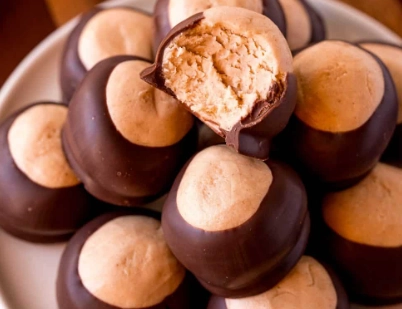
If you've ever searched for a buckeyes chocolate peanut butter recipe and felt overwhelmed by the variations, you're in the right place. We're sticking to the classic.
What Are Buckeyes Candy, Anyway?
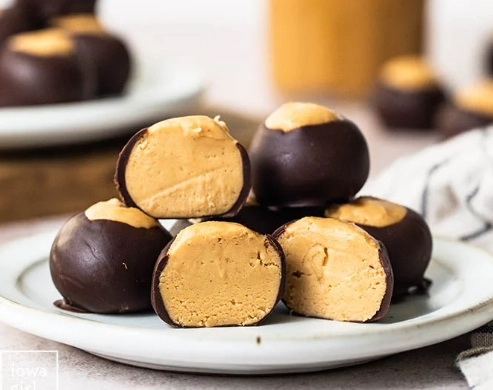
At its heart, a buckeye is a simple confection: a sweet, creamy peanut butter ball that's partially dipped in dark chocolate, leaving a bare circle of peanut butter showing on top. The finished candy is meant to resemble the nut of the Ohio buckeye tree (Aesculus glabra), which is a dark brown nut with a light tan patch. That's where the name comes from.
They are a no-bake candy, belonging to the same family as rum balls or cake pops, but far simpler. The texture is firm yet creamy, not crunchy. The taste is that perfect, timeless combination of salty-sweet peanut butter and rich chocolate. It's a combination that's hard to mess up, but also easy to elevate from good to great.
They're a staple in the Midwest, especially around Christmas and Ohio State football games. But really, a good buckeyes chocolate peanut butter treat knows no season. I've made them for summer potlucks, teacher appreciation gifts, and just because it's Tuesday.
The ONLY Buckeyes Chocolate Peanut Butter Recipe You'll Ever Need
After testing more versions than I care to admit, this is the formula that consistently works. It's not "healthified." It's not "deconstructed." It's the classic, crowd-pleasing, potluck-winning recipe. The ingredient list is short, but the choices you make here matter.
Classic Buckeyes Ingredients
- Peanut Butter (1 ½ cups): This is the star. You must use processed, shelf-stable peanut butter like Jif or Skippy. The oil separation in natural peanut butter will ruin the texture, making the centers too soft and oily. The goal is a firm, moldable dough. The added sugars and stabilizers in conventional peanut butter are actually your friends here.
- Unsalted Butter (½ cup, softened): Real butter, not margarine. It adds richness and helps the mixture hold its shape. Soften it to room temperature so it blends seamlessly.
- Vanilla Extract (1 teaspoon): Pure extract is best. It rounds out the flavor.
- Powdered Sugar (4 cups, sifted): Also called confectioners' sugar. Sifting is non-negotiable unless you enjoy little sugar lumps in your candy. It provides structure and sweetness without graininess.
- Salt (¼ teaspoon): A pinch enhances all the flavors. If you use salted butter, you can reduce this slightly.
- Chocolate for Dipping (12 oz): High-quality chocolate chips or melting wafers. I prefer a mix of semi-sweet and dark chocolate chips. Milk chocolate can be too sweet against the peanut butter. For foolproof dipping, chocolate melting wafers (like Ghirardelli or Guittard) are fantastic because they're formulated to melt smoothly and set with a snap.
- Paraffin Wax or Coconut Oil (1-2 tablespoons, optional): A touch of paramount wax (found in the canning aisle) or coconut oil thins the chocolate for easier dipping and gives it a lovely sheen. This is an old-school trick. Many modern melting wafers don't need it.
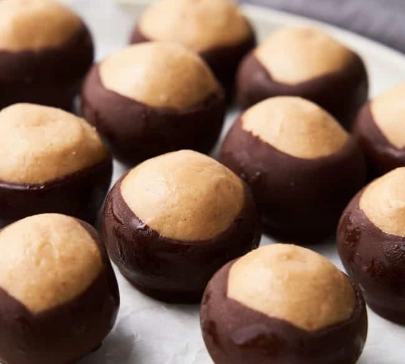
Step-by-Step: Making the Peanut Butter Centers
This is where you build the foundation. Get this right, and the dipping becomes much easier.
- Cream the Base: In a large bowl, beat the softened butter and peanut butter together until completely smooth and combined. A hand mixer works great here. Scrape down the sides of the bowl. Beat in the vanilla and salt.
- Incorporate the Sugar: This is crucial. Add the sifted powdered sugar, one cup at a time, mixing on low speed after each addition. After the third cup, it will look crumbly. That's normal. After the fourth cup, it should start to come together into a stiff dough.
- Test the Dough: Pinch a small piece and roll it into a ball. It should hold its shape perfectly without being sticky. If it's sticky, you can add a little more powdered sugar, a tablespoon at a time. If it's too dry and crumbly, add a teaspoon of softened butter or a tiny bit more peanut butter.
- Form the Balls: Roll the dough into uniform balls, about 1 inch in diameter. I use a small cookie scoop (about 1 tablespoon) for consistency. Place them on a baking sheet lined with parchment paper. This is a great task to do while watching TV.
- Chill Thoroughly: This is the most important step for easy dipping. Pop the whole baking sheet into the freezer for at least 30 minutes, or the refrigerator for 2 hours. The balls need to be very cold and firm when they meet the warm chocolate.
The Art of Dipping: How to Get That Perfect Buckeye Look
This is the step that intimidates people. Warm chocolate, cold peanut butter balls... it can get messy. Here's how to master it.
First, prepare your chocolate. Melt it slowly using a double boiler or in the microwave in 30-second bursts, stirring vigorously between each burst. If you're using chocolate chips and not wafers, stir in a tablespoon of paramount wax or coconut oil once it's mostly melted. This thins it to a perfect dipping consistency.
Keep the peanut butter balls in the fridge or freezer, taking out only a handful at a time. Warm hands melt the dough.
Now, for the dipping tool. Forget forks. They leave marks. The best tools are:
- A toothpick: The classic method. Insert a toothpick into the center of a cold peanut butter ball. Dip it about 3/4 of the way into the melted chocolate, leaving the top bare. Swirl it gently, lift it out, let the excess drip off, then place it toothpick-side-up back on the parchment paper. You'll smooth over the toothpick hole later.
- A chocolate dipping fork or a candy dipper: These have thin, looped prongs that hold the ball securely and let excess chocolate drain away cleanly.
After dipping, immediately return the tray to the fridge to let the chocolate set completely. Once set, you can gently smooth over the toothpick hole with a clean fingertip.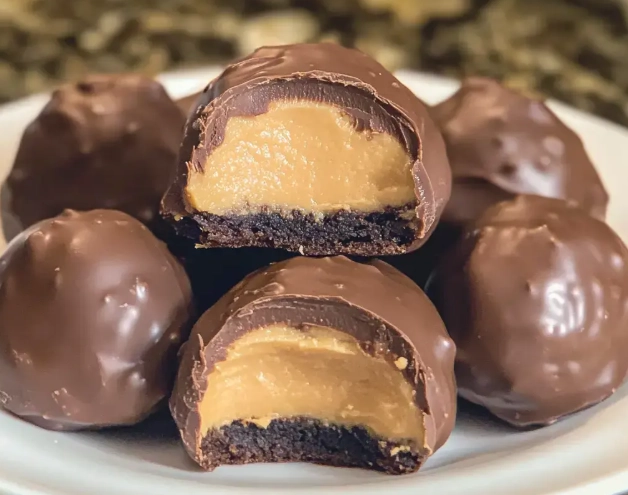
Getting that smooth, shiny shell on your buckeyes chocolate peanut butter candies is all about temperature control and the right chocolate consistency.
Buckeyes vs. Other Peanut Butter Candies: A Quick Comparison
You might wonder how buckeyes stack up against other treats. Here’s a breakdown.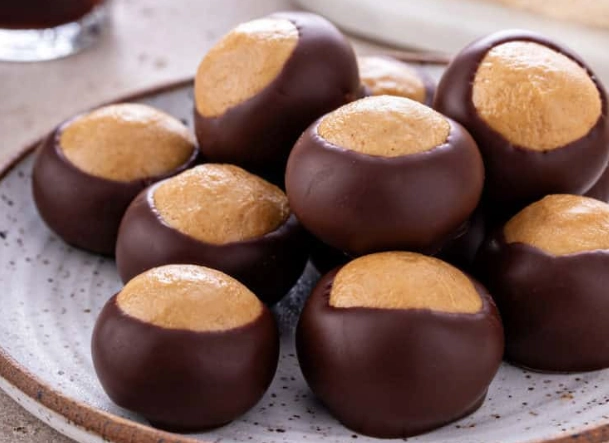
| Candy | Main Ingredients | Texture | Key Difference from Buckeyes |
|---|---|---|---|
| Buckeyes | Peanut butter, powdered sugar, butter, chocolate dip | Firm, creamy center; hard chocolate shell | Partially dipped, leaving peanut butter exposed. |
| Peanut Butter Balls | Often similar to buckeyes | Similar | Typically fully coated in chocolate. |
| Peanut Butter Cups | Peanut butter, chocolate, sugar | Softer, creamier center; cup-shaped chocolate | Encased in a chocolate cup, not hand-formed. |
| Peanut Butter Fudge | Sugar, butter, milk, peanut butter | Dense, smooth, and creamy | No chocolate coating, set in a pan and cut. |
So, while a buckeye is essentially a specific type of peanut butter ball, that signature "eye" of peanut butter is what makes it distinct. It's not just aesthetics; it gives you a perfect bite with both elements.
Your Buckeyes Chocolate Peanut Butter Questions, Answered
Beyond the Classic: Variations and Ideas
Once you've mastered the basic buckeyes chocolate peanut butter recipe, you can play around. Here are a few ideas, though I personally think the classic is hard to beat.
- Crunchy Peanut Butter: Use crunchy peanut butter for a bit of texture. Just be aware the pieces can make rolling perfectly smooth balls a tad harder.
- Different Coatings: Try dipping in white chocolate or a mix of melted white and dark chocolate for a "swirled" look. You could also roll the peanut butter balls in crushed graham crackers or pretzels before chilling for a salty crunch.
- Flavor Twists: Add a 1/4 teaspoon of cinnamon to the peanut butter mixture, or mix in some very finely chopped crispy bacon (trust me, it's good).
- For Gifting: Place each buckeye in a small paper candy cup and pack them in a decorative box or tin. They make incredible homemade gifts. I like to include a little note explaining what a buckeye is for those unfamiliar with the treat.
Why This Recipe Works: The Science of the Simple Ingredients
You might not think about food science when making candy, but understanding a bit of the "why" helps prevent mistakes. The powdered sugar isn't just for sweetness. Its fine cornstarch content absorbs moisture and fat, helping to create that firm, dry-enough-to-roll dough. That's why sifting is key—it aerates the sugar and breaks up clumps of cornstarch.
The processed peanut butter is an emulsion of peanut solids, oils, sugars, and stabilizers. This emulsion stays stable when mixed with the butter and sugar, giving you a predictable, workable texture. Natural peanut butter is just ground peanuts and oil, and that emulsion breaks easily, releasing oil. The U.S. Department of Agriculture's FoodData Central shows the clear nutritional and compositional differences between the two types, which directly translates to performance in recipes like this.
Chilling the balls solidifies the butter fat within them. A solid, cold center is less likely to melt when dipped in warm chocolate and helps the chocolate set quickly around it, minimizing drips and pooling.
So, when the recipe says "use this, not that," or "chill thoroughly," there's a real, practical reason behind it. It's not just tradition; it's chemistry.
Final Thoughts from My Kitchen to Yours
Making buckeyes chocolate peanut butter candy is one of those kitchen projects that feels genuinely rewarding. There's something special about turning a few simple ingredients into these beautiful, delicious candies that people always seem so delighted to receive.
The keys are simple: use the right peanut butter, sift that sugar, chill the balls until they're firm, and don't be afraid of the dipping process. Have everything set up before you start—your melted chocolate, your chilled balls on a tray, a clean parchment-lined tray for the dipped ones. It makes the process flow.
Don't stress if your first few don't look bakery-perfect. Mine certainly didn't. The taste will still be fantastic. And honestly, a slightly misshapen, homemade-looking buckeye often has more charm than a flawless one. It shows someone made it with their hands.
Whether you're an Ohio native craving a taste of home, a curious baker looking for a no-bake treat, or someone searching for the perfect edible gift, this buckeyes chocolate peanut butter guide has you covered. Grab your peanut butter and powdered sugar, and give it a try. You might just find a new favorite kitchen tradition.
Got a buckeye tip or story of your own? I'd love to hear it. Happy candy making!
Reader Comments