Quick Navigation
If you’re anything like me, you’ve probably stood in the grocery aisle, staring at a jar of peanut butter, wondering just how many calories are lurking inside that creamy goodness. I mean, we all know it’s not exactly a “diet food,” but is it really that bad? Should we feel guilty for spreading it on our morning toast?
Let’s cut through the noise. The simple, straight answer to “how many calories in peanut butter” is this: for a standard 2-tablespoon (32-gram) serving of regular, processed peanut butter, you’re looking at about 190 to 200 calories. But here’s the kicker—and why I’m writing this guide—that number is almost meaningless by itself.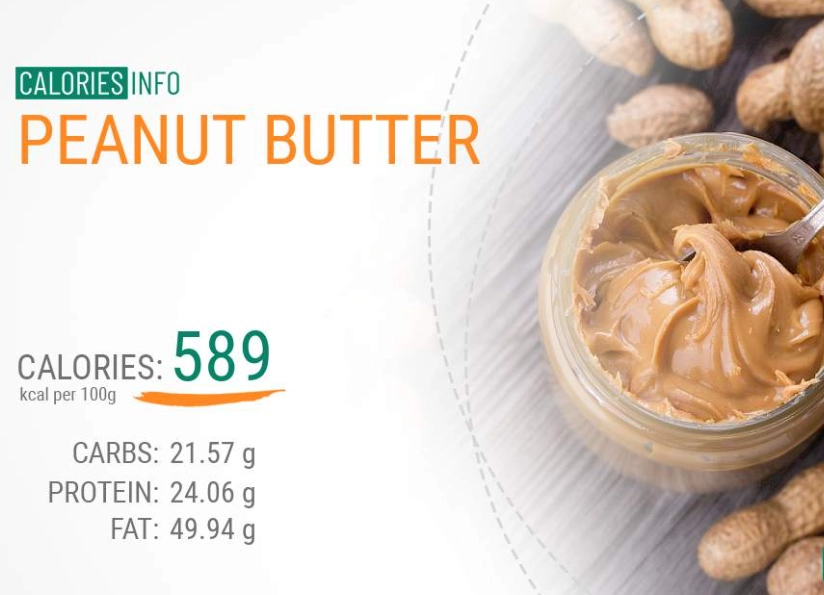
Why? Because the type of peanut butter (natural vs. regular), the brand (Jif vs. Skippy vs. a store brand), and even whether it’s creamy or crunchy can shift those calories. More importantly, those calories come packaged with very different nutrients. 200 calories from a sugar-and-oil-laden spread is not the same as 200 calories from one made with just peanuts and salt.
Bottom Line Up Front: Don’t just fixate on the calorie count. Where those calories come from—healthy fats, protein, or added sugars—is what truly matters for your health and satiety. A slightly higher-calorie natural peanut butter is almost always a better choice than a lower-calorie “light” version full of fillers.
Peanut Butter Calories: A Detailed Brand-by-Brand & Type Breakdown
Okay, let’s get specific. I went down a rabbit hole comparing nutrition labels so you don’t have to. Below is a table that breaks down exactly how many calories are in peanut butter from some of the most popular brands and types. I’ve included the macronutrients (fat, carbs, protein) too, because they tell the real story.
All values are for a 2-tablespoon (32g) serving, which is the standard serving size you’ll see on most labels. (Though let’s be honest, who stops at exactly one serving?)
| Brand & Type | Calories | Total Fat (g) | Saturated Fat (g) | Carbs (g) | Sugars (g) | Protein (g) | Key Notes |
|---|---|---|---|---|---|---|---|
| Jif Creamy (Regular) | 190 | 16 | 3 | 8 | 3 | 7 | The classic. Contains added sugar, molasses, hydrogenated oils. |
| Skippy Creamy (Regular) | 190 | 16 | 3.5 | 7 | 3 | 7 | Very similar to Jif. A staple with a slightly different taste. |
| Justin’s Classic Peanut Butter (Natural) | 190 | 16 | 2.5 | 6 | 2 | 8 | Just dry roasted peanuts, palm oil, salt. Oil separates. |
| Smucker’s Natural Creamy (No Salt) | 210 | 18 | 2.5 | 6 | 1 | 8 | Only ingredient: peanuts. Higher fat/calories, no additives. |
| Peter Pan Creamy (Regular) | 200 | 17 | 3.5 | 6 | 3 | 8 | Another big brand in the regular, stabilized category. |
| PB2 Powdered Peanut Butter (Powder) | 60 | 1.5 | 0 | 5 | 2 | 6 | Dramatically lower in calories and fat. Must be reconstituted. |
| Jif Natural Creamy (Stirred) | 190 | 16 | 2.5 | 7 | 2 | 7 | “Natural” but contains palm oil and sugar to prevent separation. |
| Crazy Richard’s 100% Peanuts (Natural) | 210 | 18 | 2.5 | 6 | 1 | 8 | Pure peanuts. No salt, no oil, no sugar. Highest “natural” calorie count. |
| Generic/Store Brand Creamy (Regular) | 180-200 | 15-17 | 2.5-3.5 | 6-8 | 2-4 | 7-8 | Usually very similar to national brands, sometimes slightly cheaper macros. |
Why Do Calories in Peanut Butter Vary So Much?
Look at that table. You’ve got everything from 60 calories (PB2) to 210 calories (pure peanuts). What gives? It boils down to three main things: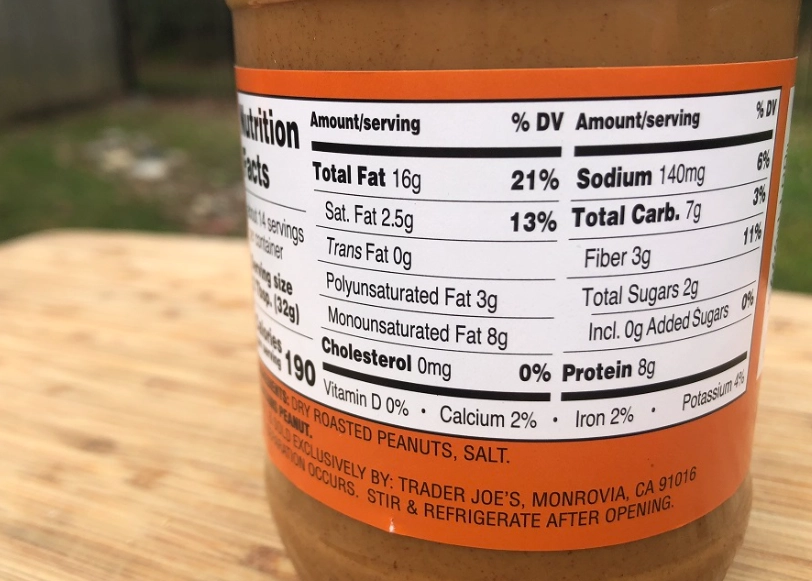
1. Fat Content (The Big One): Peanuts are about 50% fat by weight, and it’s mostly healthy monounsaturated and polyunsaturated fat. When you make powdered peanut butter, you press out most of this oil. That’s why PB2 is so low in calories—it’s mostly protein and carbs from the peanut solids. Conversely, a “100% peanuts” butter has all its natural fat, hence the higher calorie count.
2. Added Ingredients: Regular big-brand peanut butters add hydrogenated vegetable oils (to prevent oil separation) and sugars (for taste). These ingredients tweak the calorie balance. Hydrogenated oils are a source of trans fats, which are terrible for heart health, even in small amounts. The FDA has taken steps to remove them, but some older formulations or products in other countries may still contain them.
3. Serving Size Shenanigans: This is a sneaky one. Some brands might list a serving as 1 tablespoon (16g) instead of 2, making their calorie number look lower at a glance. Always check the serving size!
So, asking “how many calories in peanut butter” is like asking “how long is a piece of string?” You need to know what kind of string.
Beyond Calories: The Nutrient Powerhouse (and Pitfalls)
If we only talk about calories, we’re doing peanut butter a massive disservice. Let’s look at what you’re actually getting.
The Good Stuff (Why It’s Worth the Calories)
A serving of natural peanut butter provides:
- Healthy Fats: Primarily monounsaturated fat (the same kind in olive oil), which is great for heart health.
- Plant-Based Protein: About 7-8 grams per serving. This is key for feeling full, maintaining muscle, and repairing tissue.
- Fiber: Around 2-3 grams. Good for digestion and, again, satiety.
- Vitamins & Minerals: It’s a good source of Vitamin E (an antioxidant), Magnesium (for muscle and nerve function), Potassium, and B vitamins like Niacin.
According to the USDA’s FoodData Central, peanuts and peanut butter are a nutrient-dense food. The key is to get these nutrients without the downside…
The Not-So-Good Stuff (What to Watch For)
With conventional, non-natural peanut butters, you often get:
- Added Sugars: This can range from 1-4 grams per serving. That might not sound like much, but it adds up, especially if you’re having more than one serving (which, come on, we all do).
- Added Oils (Hydrogenated/Palm): Added to stabilize the product so it doesn’t separate. Hydrogenated oils contain trans fats. Palm oil, while trans-fat-free, has significant environmental and sustainability concerns.
- Extra Sodium: Some brands pack in more salt for flavor.
My Personal Rule: I try to only buy peanut butter where the ingredients list is “Peanuts, Salt.” Maybe “Peanuts” only. Once you see sugar, palm oil, or hydrogenated oils, you’re getting a less healthy product, regardless of the answer to “how many calories in peanut butter.”
How to Enjoy Peanut Butter Without Wrecking Your Diet
So, you love peanut butter but are watching your weight. Here’s the practical, no-BS advice.
1. Master Portion Control (This is Non-Negotiable)
This is the #1 reason people think peanut butter is “fattening.” They eyeball it. A “serving” is 2 level tablespoons. Not heaping. Not a giant spoonful dug straight from the jar (we’ve all been there).
Pro Tip: Use a measuring spoon for the first week. You’ll be shocked at how little 2 tablespoons looks—and how much you were probably eating before. Once you train your eye, you can eyeball it.
2. Pair It Smartly
Don’t just eat it by the spoonful (tempting, I know). Pair your measured serving with foods that balance its fat and protein:
- Spread on apple slices or banana (adds fiber and volume).
- Mixed into plain Greek yogurt (boosts protein even more).
- Blended into a smoothie with spinach and berries.
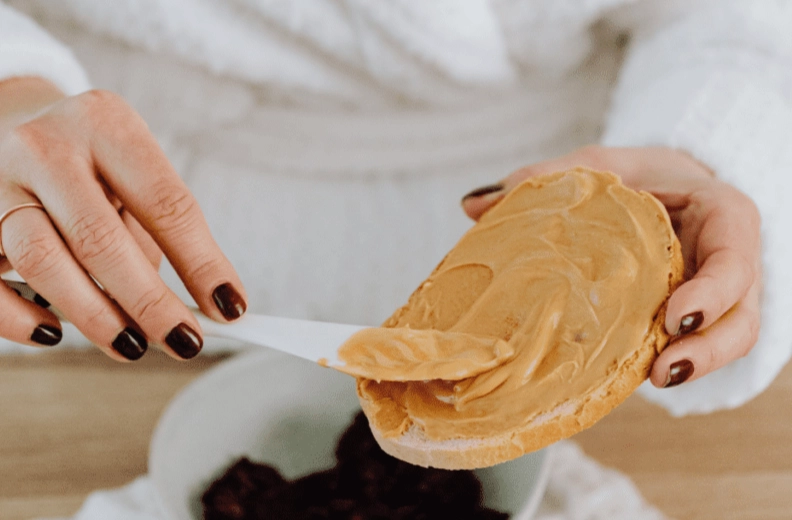
- Spread on whole-grain toast or rice cakes.
This combination of fat, protein, and fiber/carbs creates a much more satisfying and blood-sugar-friendly meal or snack than peanut butter alone.
3. Choose the Right Type for Your Goal
- For Weight Loss/Fat Loss: Go for natural peanut butter (“peanuts, salt”) or powdered peanut butter (PB2) if you really need to slash calories in a recipe. The natural version’s fat and protein will keep you fuller than the powdered one.
- For Muscle Gain/Bulking: Natural peanut butter is your friend. The healthy fats and extra calories are beneficial here.
- For General Health: Always choose natural. Avoid the “low-fat” or “light” versions—they usually replace fat with sugar or other fillers, which is worse.
4. Be Wary of “Low-Fat” and “Light” Versions
I made this mistake years ago. I saw “Jif Low-Fat” and thought, “Perfect!”
It wasn’t. They removed some fat, but to make it taste good, they added more sugar and fillers like corn syrup solids. The calorie difference was minimal (maybe 20 calories less per serving), but the nutritional profile was far inferior. The Harvard T.H. Chan School of Public Health notes that the type of fat in peanuts is beneficial, so removing it isn’t necessarily a health win.
The lesson? Don’t be fooled by marketing.
Frequently Asked Questions (FAQs)
Yes, but with major caveats. Its high protein and fat content promote satiety, meaning you feel full longer, which can help you eat less overall. However, it is calorie-dense. You must practice strict portion control. A tablespoon or two can be a great part of a weight-loss diet, but mindlessly eating from the jar will hinder progress.
Powdered peanut butter (like PB2 or PBFit) has the fewest calories by far—about 60 calories per 2-tbsp serving of the powder. However, remember it has most of the fat removed, so it’s less filling. For traditional jarred peanut butter, “regular” brands with added oils and sugars tend to be slightly lower in calories (190-200) than 100% natural peanut butter (200-210), but the natural version is nutritionally superior.
This depends entirely on the size of the spoon and how heaping it is. A standard level tablespoon holds about 16 grams of peanut butter, which is roughly 95-105 calories. A heaping tablespoon can easily be 150+ calories. This is why measuring is so important when you’re counting.
For the same brand and type, the calorie difference between creamy and crunchy is negligible—usually within 5-10 calories per serving. The crunch comes from finely chopped peanuts, which don’t significantly alter the macronutrient breakdown. Choose based on texture preference, not calories.
Almond butter has slightly more calories than peanut butter, with around 200 calories per 2-tbsp serving. It also has more monounsaturated fats and is a good source of vitamin E and magnesium. However, it is also more expensive.
Conclusion
So, how many calories are in peanut butter? The answer is not as simple as you might think. It depends on the type of peanut butter you choose. However, the most important thing to remember is that the quality of the calories matters more than the quantity.
If you are looking for a healthy and delicious way to add peanut butter to your diet, choose a natural peanut butter that is made with just peanuts and salt. This type of peanut butter is a good source of healthy fats, protein, and fiber, and it can help you feel full and satisfied.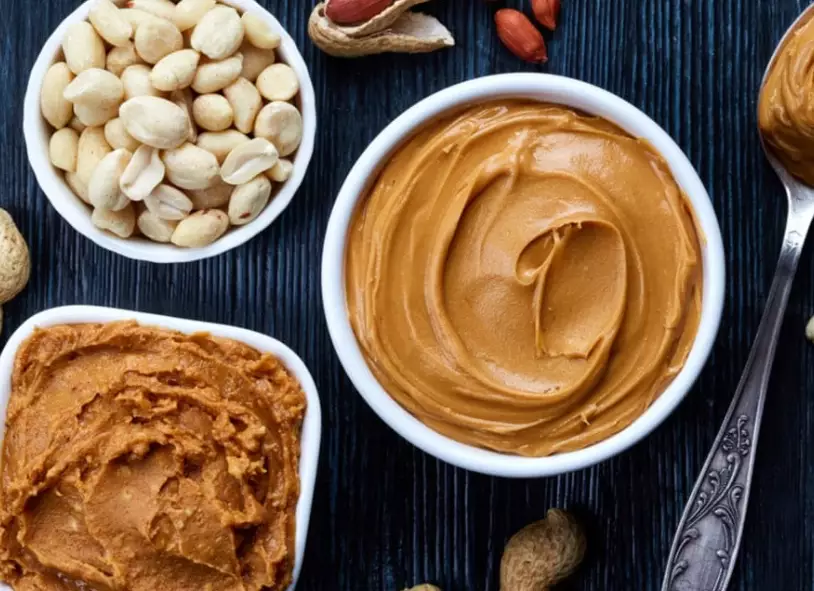
So, next time you are at the grocery store, don't just grab the first jar of peanut butter you see. Take a moment to read the label and choose a natural peanut butter that is made with just peanuts and salt. Your body will thank you for it.
Additional Tips:
- Store natural peanut butter in the refrigerator to prevent the oil from separating.
- If you are allergic to peanuts, there are many other nut and seed butters available, such as almond butter, cashew butter, and sunflower seed butter.
- Peanut butter can be a healthy part of a balanced diet, but it is important to enjoy it in moderation.
I hope this article has helped you to understand how many calories are in peanut butter and how to choose the healthiest type for your needs. Enjoy!
Reader Comments